


67 cringe-worthy clichés of book reviewing
A dishonor roll of the shameless hype used by critics, wittily decoded by their peers and by publishing insiders

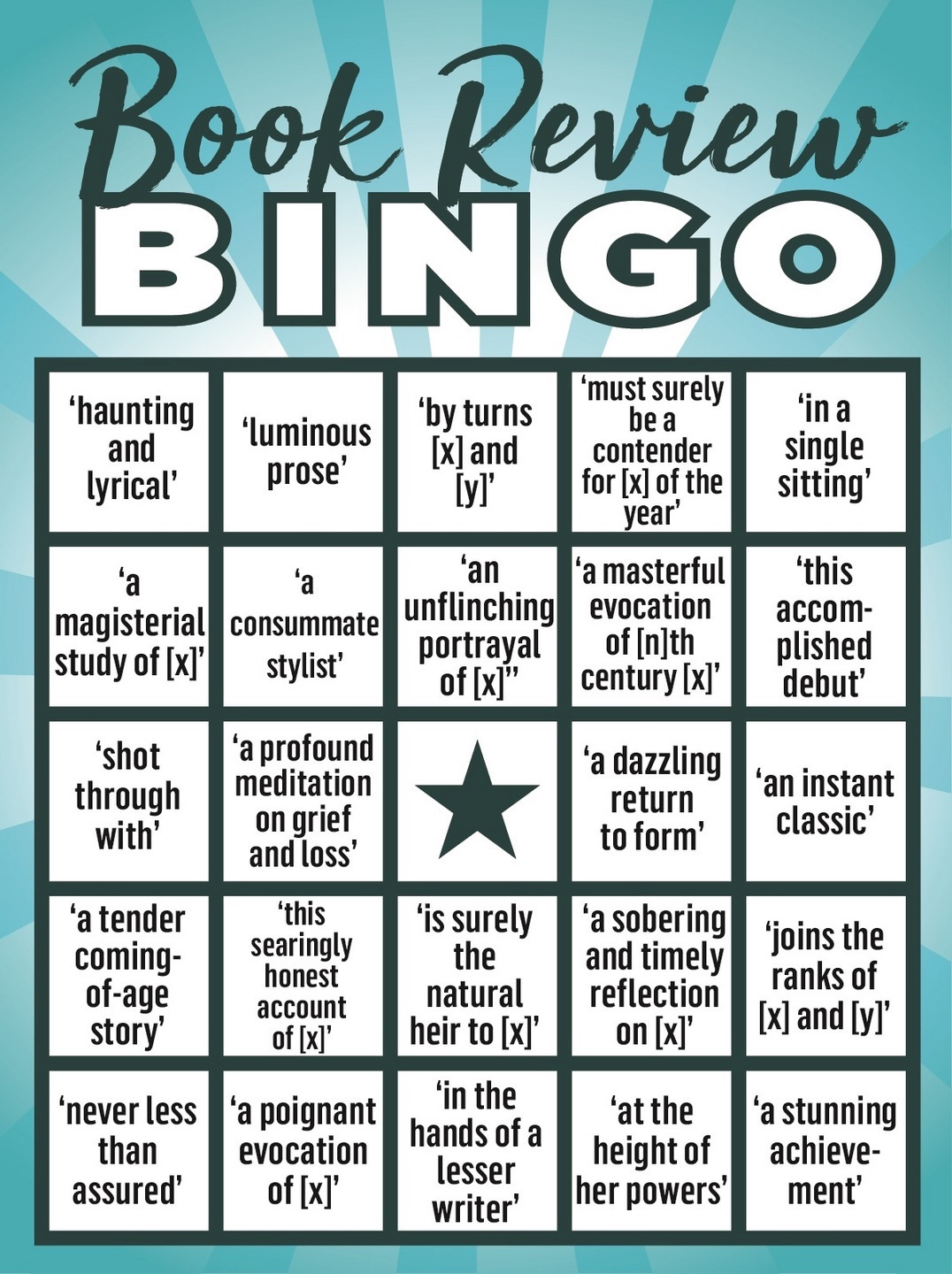
You might think that if anyone would recognize a publishing cliché, it’s Gilbert Cruz, the editor of the New York Times Book Review. Or you might think that if he didn’t, an alert copy editor would jump in to say, “Hey, don’t we have some pride left here at America’s newspaper of record?”
If you thought either of those, you’d have learned otherwise from Cruz’s recent interview in the Times with Isabel Allende. He introduced it by saying that Allende’s first novel, The House of the Spirits, had been “a runaway bestseller.”
I don’t know how long “runaway bestseller” has been a cliché, but a variant may have existed when Shakespeare’s First Folio went on sale in London in 1623. If it’s not the oldest on record, it’s only because there’s a lot of competition for the title.
So many clichés were blighting reviews by the time I began editing the book section of a large newspaper that I made a preemptive strike against them. I sent every freelance critic a list of trite words or phrases that, I implied darkly, were never going to land in a half million muddy driveways each Sunday.
But new clichés kept arriving. I wanted to shout, whenever Michiko Kakutani called a book “affecting” in Times: “Well, how did it affect you, Michi: Did it make you want to vomit or to kiss the pages?”
As for that weasel word “compelling”: Robert Silvers, the late editor of the New York Review of Books, used to ask: “Compelled to do what?”
One day I’d had enough. I asked publishing veterans on the old Twitter—editors, agents, critics, and authors—to decode words like “absorbing,” “luminous,” and “provocative” along with phrases such as “a promising debut” and “in the proud tradition of J.R.R. Tolkien.”
To inspire the pros, I tossed out some of my translations of empty catchphrases or euphemisms. I collected the most memorable in a post last year on Medium and have revised and expanded it for this 2025 Substack edition.
Many terms on the following alphabetical list first surfaced in press releases from book publicists or marketers and spread to overeager reviewers. Here are 67 of my favorite definitions from the pros, including bestselling authors like
, winners of major awards like , and top executives at publishing firms.“absorbing”: “makes a great coaster” @DonLinn, publishing consultant
“accessible”: “not too many big words” @MarkKohut, writer and consultant
“acclaimed”: “poorly selling”
, former editorial director of Bloomsbury Press and author of What Editors Do: The Art, Craft, and Business of Book Editing“affecting”: “I felt something. Could’ve been the book. Could’ve been my lunch.”
, journalist and bestselling author of Good in Bed, The Breakaway, The Griffin Sisters’ Greatest Hits, and other novels“approachable”: the new ‘“accessible” for critics who prefer longer and clunkier words
“as good as any novel”: “why should writers of fact aspire to the standards of novelists?” Sam Leith via
“the book we need now”: will be outdated by the time your Visa bill for it arrives
(HT: )“breakout book”: “Hail Mary pass” @BookFlack, deputy director of publicity at a Big Five firm
“brilliant debut collection”: “yet another friggin’ MFA thesis”
, photographer and author of the award-winning novel Combat Camera“brilliantly defies categorization”: “even the author has no clue what he’s turned in”
, vice president and associate publisher of Vintage backlist books at Penguin Random House“buzzy”: causing lots of zzzzs among readers
“captures the times we live in”: “captures the times we were living in two years ago”
, critic and author of The New Midwest“classroom-friendly”: “kids won’t read it unless they have to” @lindabookmania, book editor and publicist at Book Mania
“compelling” : See Robert Silvers’ comment above.
“continues in the proud tradition of J.R.R. Tolkien”: “this book has a dwarf in it”
, bestselling author of books including the speculative thriller Past Crimes“deceptively simple”: “Is the book/poem/style simple or isn’t it? Or does it remind us that to mere readers, something might look simple, and that they need clever critics to undeceive them?” Sam Leith via
“dedicated fan base”:“Mom and spouse” @mat_johnson, novelist, Philip H. Knight, Chair of Humanities at the University of Oregon, winner of the American Book Award, the Hurston/Wright Legacy Award, and other honors
“the editor should be shot”: “wouldn’t it be better to shoot those who write ‘the editor should be shot’?” Sam Leith via
“edgy”: “contains no adult voices of reason”
, writer and former English teacher“endearing”: “heavy on the treacle” @lolacalifornia, author of Another Love Discourse and other novels
“epic”: “very long” @sheilaoflanagan, bestselling author of The Woman on the Bridge, Stand by Me, and other novels
“erotic”: “porn”
“essential”: important for someone who isn’t necessarily you
(HT: )“ethnic literature”: “stuff written by nonwhite people” @elprofe316, poet, essayist, and curator and co-founder of @la_cocina_arts
“frothy romp”: “funny book by lady” “funny = funny book by a man”
“gripping”: you’ll forget what it was about seconds after you finish it
“ground breaking romantic comedy”: “heroine hit by a car at the end. By a man.”
, bestselling author of romantic novels, including Decent Exposure, made into the Lifetime TV movie “12 Men of Christmas”“heartwarming”: “major character is a dog, an old guy, or both”
, poet, essayist, columnist for the Nation, and winner of major prizes including an American Book Awards lifetime achievement award“Hemingwayesque”: “Hemingwayesque = short sentences. Faulkneresque = long sentences. Fitzgeraldesque = regret, longing, rich people” Arthur Phillips, five-time Jeopardy! champion and author of award-winning novels including The King at the Edge of the World
“historical” novel: “American = dust, prairies & drab clothing; Italian = poison & plots; English = sex, beautiful clothes & beheadings.”
, literary agent“It grabs you by the throat and won’t let go”: “it’s gonna hurt”
, author of I’m Not Hanging Noodles on Your Ear“I’ve been a fan of Author X for a long time”: “I slept with them regrettably, in MFA school.” @WeeGee, book critic and author of Brat Pack America, Practical Classics, and Bookmark Now
“a labor of love”: you’ll think you should have been paid to read it
“lapidary prose” : “I did not know what half of these words meant”
“leaves you gasping for breath”: don’t read it if you have asthma
“literary”: “plotless” @MarkKohut
“long-awaited”: late
“luminous” or “lyrical”: “not much happens”
“magisterial”: “long”
“memoir”: “nonfiction until proven otherwise” @BookFlack
“meticulously researched”: “overloaded with footnotes” @BookFlack
“monumental”: makes a good doorstopper
“my all-time favorite writer”: blurbed my book
“newly discovered”: should have stayed lost
“the next George R.R. Martin”: enrages his fans by starting series he’ll never finish
“nominated for a Pulitzer”: author paid the $75 entrance fee
HT: @mat_johnson“novella”: “short story with large font” @BookFlack
“promising debut”: “many flaws, but not unforgivably bad”
“provocative”: Ron DeSantis will try to get it banned in Florida
“a real tear-jerker”: “writing so bad it makes you cry” Drew S. Goodman, author of The Fulness of Times
“ripped from the headlines”: this is why newspapers are dying
“rollicking”: “chaotic”
“runaway bestseller”: somebody should have locked the barn door
“sensual”: “soft porn”
“stunning”: “major character dies”
“thousands of followers on TikTok”: doesn’t mind giving Xi Jinping access to personal data
“unflinching”: “has a lot of bad words”
, author of the bestselling Not Safe for Work, shortlisted for the Center for Fiction first novel prize“unputdownable”: a companion for all those heavy coffee-table books that are “unpickupable”
“visionary”: “can’t be proved wrong yet” @IsabelAnders, author of Miss Marple: Christian Sleuth and other books
“voice of a generation”: “instantly dated” @MarkKohut
“a writer to watch”: as opposed to one you’ll actually want to read
Jan is an award-winning critic and journalist who has been the book editor of Ohio’s largest newspaper and a vice president of the National Book Critics Circle.
Please consider becoming a paid subscriber if you’d like to read more posts like these and further thoughts on this story. I keep updating this list and expect to paywall future editions and comments on it. Thank you!
Notes
https://www.nytimes.com/2025/04/26/magazine/isabel-allende-interview.html
https://www.theoldie.co.uk/blog/avoid-these-clich%C3%A9s-like-the-plague: This link no longer works, but here’s a related one in which Sam Leith talks about how to write a book review: https://www.theoldie.co.uk/podcasts/oldie-writing-course-how-to-write-a-review-with-sam-leith-the-spectators-literary-editor
This list is luminously gripping me by my heartbreaking throat.
I vote for “sweeping” as the one I’m most over. It codes similar to “epic,” I think—long, maybe also lots of characters—but why did everyone decide to use a cleaning device to describe a book?