
Dan Brown's 'Da Vinci Code' is more famous than 'War and Peace'
Why I still refuse to fork over $38 for the latest bilge by an author who once wrote, 'His eyes went white, like a shark about to attack'

Every so often, I like to be reminded of why I don’t read certain authors. It eases a lot of guilt.
Sometimes, when I dislike a novel, readers will say I “read the wrong book” by its author. They may be right, but I wonder: Would I have liked another better?
That happened just recently after I panned Rebecca Yarros’ romantasy blockbuster Onyx Storm, the fastest-selling adult novel in two decades. It’s the third book in her Empyrean series, and people said I should have read her superior first volume, Iron Flame. They agreed so strongly on it, I was sure they had a point.
But I couldn’t quite convince myself that I’d have liked Iron Flame much better. In Onyx Storm, Yarros doesn’t write “He turned red” when she could say, “His complexion favors a tomato.” The stilted language made me wonder if she was overusing AI in her writing, a suspicion I learned others had raised on Reddit months earlier. If that was true, it might not have mattered where I started.
Then there’s Dan Brown, who makes Yarros look like a writer who’s still looking for her lost shaker of salt on bestseller lists. His novels, including The Da Vinci Code and Angels and Demons, have sold more than 250 million copies in 56 languages. The Da Vinci Code ranked No. 12 on a YouGov poll of famous books of fiction, well ahead of many I love, including Pride and Prejudice (No. 29), War and Peace (No. 39), and Bridget Jones’s Diary (No. 60).
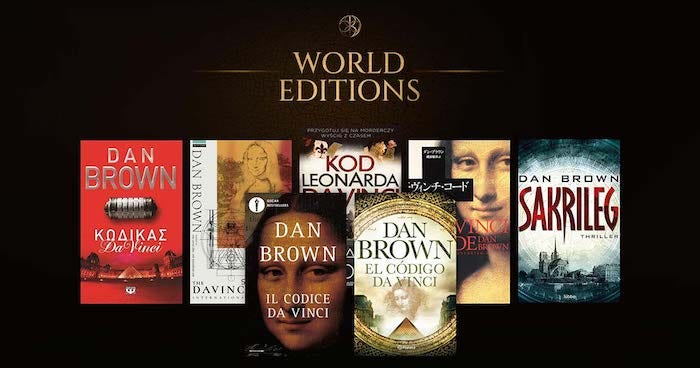
The New York Times called The Da Vinci Code an “exhilaratingly brainy thriller” on its publication in 2003. But I abandoned it early on and haven’t gone back to Brown for reasons it’s perhaps best not to consider too deeply. Do I want more evidence that, unlike 250 million others worldwide, I’m not “brainy” enough for his books?
No doubt some people would say I’m making the mistake of a literary lifetime by avoiding Brown’s new The Secret of Secrets (Doubleday, 2025), which brings back the Harvard professor of “religious symbology” Robert Langdon. A.O. Scott, the New York Times film-critic-turned-cultural-designated-hitter, says its nearly 700 pages find Langdon racing through another frantic day, mostly in Prague, when “guns are fired, locks picked, hidden passageways discovered and shocking revelations delivered on the run.” It’s No. 2 on the New York Times hardcover fiction bestseller a few weeks after its publication.
Numbers like those could make for heavy guilt if I didn’t have reminders of why I gave up on Brown in the first place. So I’m grateful to the Economist for providing one.
In a review of The Secret of Secrets, the magazine noted that each of Brown’s books takes on a big idea. The Da Vinci Code said you can find evidence that Jesus was married in Leonardo da Vinci’s The Last Supper. Inferno “seemed based on the idea that novels about arty Italian stuff sell well.” The Secret of Secrets suggests that we’re about to experience a sea change in how we understand the nature of consciousness. We know this because Brown writes: “We are about to experience a sea change in our understanding of…the nature of consciousness.”
If you’re tempted to plunge into the book to find out how that will happen, the Economist might pull you back from the cliff. It reminds you that Brown writes lines like, “His eyes went white, like a shark about to attack.”
Characters think in expository thoughts
Did I really want to settle in for 700 pages of eyes going white, like a shark about to attack? The Economist says everyone in the novel thinks in helpful expository thoughts, shown in italics:
“ ‘I’m alone on Charles Bridge,’ thinks Langdon when he is alone on Charles Bridge. ‘I am a neuroscientist,’ thinks the neuroscientist. ‘I am a healthy 49-year-old woman,’ thinks a healthy 49-year-old woman. ‘I may have made a mistake in forking out $38 for this book,’ thinks the reader who has just forked out $38 for this book.”
I can actually see a reason for reading this if you’re a would-be novelist. Writing teachers warn students to avoid expository dialogue but may skip the corollary: “Avoid expository thoughts, too, unless you want to make millions by writing thrillers about conspiracies involving the Illuminati or albino monks.” In that case Brown might be able to help, or not.
But why would you read The Secret of Secrets if you’re not looking to cash in by writing about coverups by Freemasons or others? The Economist says:
“Critics will lay into this book. But it romps along and, in truth, its exposition is part of its appeal. Mr. Brown takes things people want to understand but don’t—Italian art, Christian history, stuff in Latin—and explains them in a way they can. For all the nonsense, there is an appealing autodidactic earnestness to his books and their less-than-riveting asides about rivets.”
That sounds about right to me. My problem is that there are things I want to understand more than “stuff in Latin,” such as how to fight off sharks when I live steps from a pier where people hook them with fishing lines intended for mullet. I own a book called The Worst-Case Scenario Survival Handbook that tells how to do it, and I reread it after learning that Brown wrote in his Angels and Demons: “His eyes went white, like a shark about to attack.”
The Worst-Case Scenario rebuts the misconception that if a shark attacks, you should hit it on the nose. The book says you should go instead for the eyes, which are more sensitive than the nose. It says nothing about noticing whether those eyes “went white,” and while Dan Brown fans will no doubt find some dark “symbology” in this: That’s just given me another reason to skip his new book.
Jan Harayda is an award-winning critic and journalist who has been the book editor of a large newspaper and a vice president of the National Book Critics Circle.
You might also like my story about the scandal that has tainted the worst nonfiction book I’ve read in 2025, Amy Griffin’s The Tell, the recent subject of a 5,000-word front-page exposé in the New York Times that rebutted many aspects of the author’s claim to have “recovered” memories of a youthful sexual assault by taking an illegal drug.
Selected Notes
https://todaougov.com/ratings/entertainment/fame/fiction-books/all
https://www.nytimes.com/2025/09/09/books/review/the-secret-of-secrets-dan-brown.html
https://www.worstcasescenario.com/blog/how-to-fend-off-a-shark
I’ve always liked the scene in the TV show The Good Place where Chidi in heaven has read everything good that’s ever been written and finally decides to read Dan Brown’s trash. After that, he’s ready to cease existing.
Midlist commercial author here, pining for some of that sweet, sweet DB success. I'm sure I have written enough dubious metaphors to qualify.