
Letter from a Reader 2.3.26
Why I put Mick Herron's 'Slow Horses' out to pasture, the only nature classic that influenced Rachel Carson, and more of what I see as journalistic malpractice at the New York Times Book Review

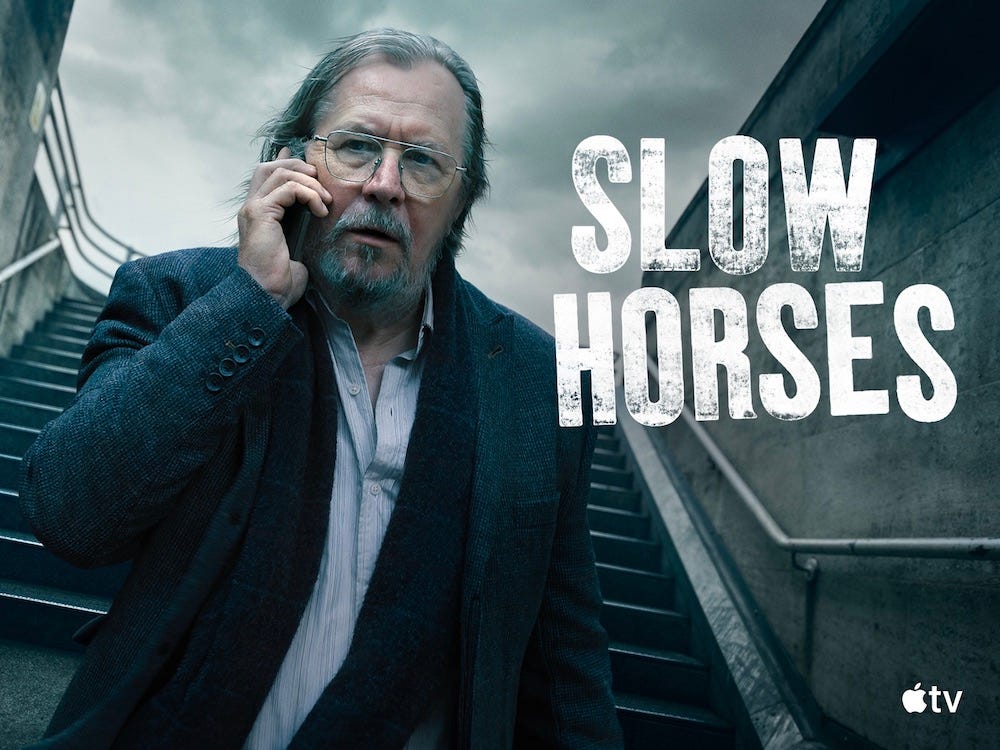
Did I make a mistake by trying to read the first of Mick Herron’s spy novels instead of watching a popular TV adaptation of them? Critics have been calling Herron the new John le Carré almost since the day the old one went to his final safe house in the sky, as one reviewer put it.
But I put his Slow Horses out to pasture after 30 pages. I couldn’t work up enough interest in its “misfits and losers” kicked downstairs by MI5 and shunted into make-work jobs at the dismal Slough House in a London backwater.
Two stars of the Apple TV+ series with the same name turn up early in Slow Horses: River Cartwright, a failed James Bond, and Jackson Lamb, whose quick wits helped him become a spymaster despite his flatulence and overall slovenliness. Herron sets up his dark satire of British intelligence with a prologue involving an explosion at the King’s Cross train station that endangers River’s life, apparently after a failure or betrayal by someone in the spy agency.
As the action moves to the seedy Slough House, names of characters whizz by like tracer bullets: Min Harper, Jed Moody, Louisa Guy, Struan Loy, Sid Baker, Kay White, Catherine Standish, and others. Some will no doubt be familiar to fans of the Slow Horses TV series, but cryptic or skimpy identifications make them hard to keep straight on the page.
Here’s how Herron describes Jackson Lamb: “He resembled, someone had once remarked, Timothy Spall gone to seed, which left open the question of what Timothy Spall not gone to seed might look like, but painted an accurate picture nevertheless.” That line “left open” other questions, too. Who is Timothy Spall? Why is the picture of him “accurate”? Would Americans or even Gen Z Brits remember a British actor who played the half-blooded wizard Peter Pettigrew in several Harry Potter films?