
Letter from a Reader 2.4.26
A Pulitzer finalist's superb book on how gun violence affects children even if they aren't physically hurt, Jane Austen on February, and more

Seven-year-old Ava Olsen developed PTSD after the fatal shooting of a classmate at her South Carolina school. She tried to cope in part by using stickers to cover up the “scary words” in Little House on the Prairie: “gun, fire, blood, kill.”
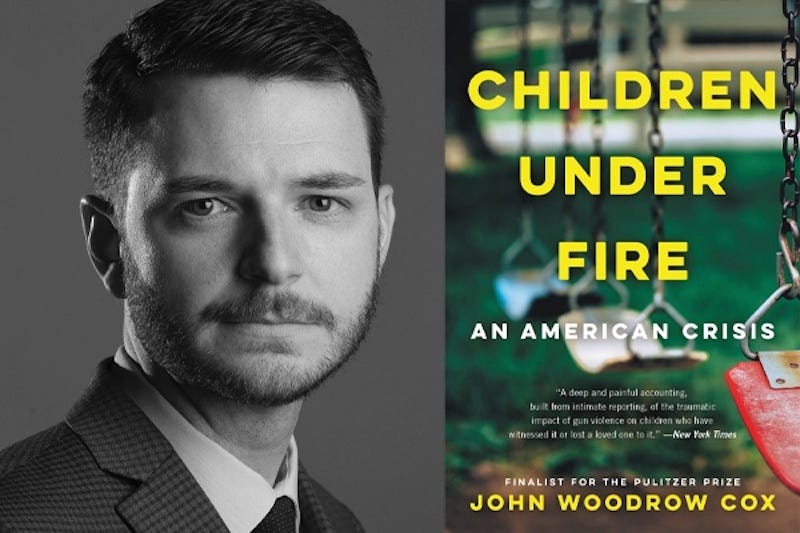
I learned these facts from Pulitzer finalist John Woodrow Cox’s superb Children Under Fire: An American Crisis (Ecco/HarperCollins, 2022), which focuses on the hidden wounds of young survivors of school and other shootings. It’s the best book I’ve read on how the proximity to gun violence harms children, even if they aren’t physically injured, and I thought about it after reading Corina Knoll’s story in today’s New York Times, “What the Crackdown Has Done to Minneapolis Children.”
“It is not unusual for them to see agents dressed in riot gear and carrying rifles stationed on their streets,” Knoll writes. “And those who have found themselves swept up unwillingly into altercations have been left to endure the aftereffects.”
One story in Knoll’s report stands out for its similarity to many in Children Under Fire, which grew out of a series Cox wrote for the Washington Post.
“Destiny Jackson’s six children cannot forget the day they were driving home and found themselves in the middle of a protest,” Knoll writes. “As her husband attempted to turn the car around, federal agents deployed tear gas and flash-bang grenades. An explosion lifted up their car and set off its airbags while acrid smoke crept inside. The family managed to escape the vehicle, while the littlest one, at 6 months old, required CPR.
“ ‘Some of the kids, they’re having night terrors about it,’ Ms. Jackson said.
“The trauma has affected each child differently. Her 11-year-old constantly checks their home’s security camera and begged his parents to buy an armored car. One of her 4-year-old twins screamed at the sight of someone holding spray-on deodorant, mistaking it for pepper spray.”
Children Under Fire has a broader focus than the Times story. It shows how the gun lobby and others have fed the crisis for children, and it gives unsparing details of how businesses have tried to exploit the fears of parents and schools by selling overpriced bulletproof backpacks and other gear.
But heartrending portraits of vulnerable children drive the book, and it might help anyone trying to understand the effects of the recent nightmare in Minneapolis. You wonder what additional horrors it might have included had Cox written it after the fatal shootings of Renée Good and Alex Pretti.
Why this is a good day to buy books by Washington Post writers
I didn’t know about the defenestration of the Washington Post newsroom when I was writing the comments above about reporter John Woodrow Cox’s Children Under Fire. But for reasons made clear in this Associated Press story, this would be an excellent day to buy books by reporters for paper. As a freelance critic, I’ve reviewed books for the just-eliminated book section of the Post under three different editors and may say more soon about this sad change.

Quote of the Day: Jane Austen on February
A quote that helped to keep my spirits up during Winter Storm Fern:
“May was better for every thing than February.”
Jane Austen, Emma
Jan Harayda is an award winning critic and journalist who has been the book editor of a large newspaper and a vice president of the National Book Critics Circle.
You’ll find capsule reviews of 50 other nonfiction books I like in the 100 Books I Like section of Jansplaining for paid subscribers.
Selected Notes
https://www.nytimes.com/2026/02/04/us/minneapolis-children-ice-schools.html
https://www.pulitzer.org/finalists/john-woodrow-cox-washington-post
https://www.harpercollins.com/products/children-under-fire-john-woodrow-cox?variant=39502302904354
Thanks for the book suggestion.