
Letter from a Reader 6.20.26
Behind the World Cup heart-attack surge, why 'the Great American Novel' doesn't exist, and a prize-winning novel about what a father owes his sons

Hello from the waterlogged Gulf Coast!
We’re drying out after the hurricane season suited up for play by flooding the Causeway at the north end Mobile Bay. In our town, Tropical Storm Arthur knocked out the power at the grocery store as dozens of us shopped for dinner one evening. We groped toward the exit in pitch-black aisles and tried not to topple cans of boiled peanuts or boxes of Quaker Instant cheddar-cheese grits.
Amid the torrents, I discovered the work of, among others, Simon Kuper, the stellar Financial Times soccer columnist. He does some of the best writing on sports I’ve read since Dave Anderson and Roger Kahn went to that press gaggle in the sky.
The World Cup heart-attack surge
Can’t afford the $2300 that StubHub wants for a seat at a World Cup match in Atlanta on Father’s Day? You might live longer for it.
Heart attacks in England increased by 25% on June 30, 1998, when England played Argentina in a legendary World Cup match that involved the ejection of David Beckham for disruptive behavior.
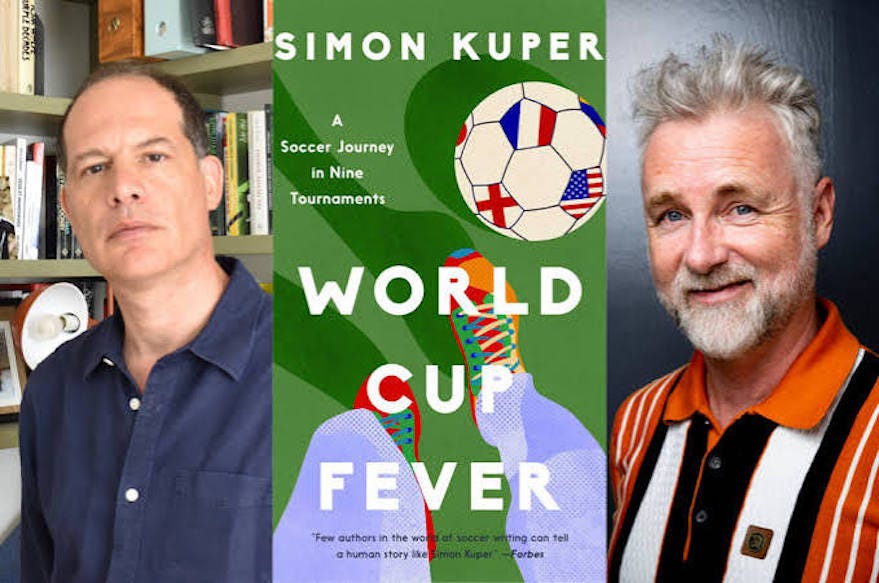
That statistic caught my eye in a review of Simon Kuper’s World Cup Fever: A Soccer Journey in Nine Tournaments (Pegasus, 2026), which said that a study had arrived at the figure by tallying hospital admissions. Living as I do in football-mad Alabama, I believed it and wondered if anyone had done similar research on heart attacks during a Southeastern Football Conference championship.
I downloaded Kuper’s book to see if it had facts about other disasters that might strike my neighbors on Saturday afternoons in the fall. It turned out that more than the World Cup can kill you. A Chinese scholar’s meta-analysis found that “mortality rises by 19 percent in a country that loses a major international tournament.” Conversely, it falls by 12 percent if a nation wins.
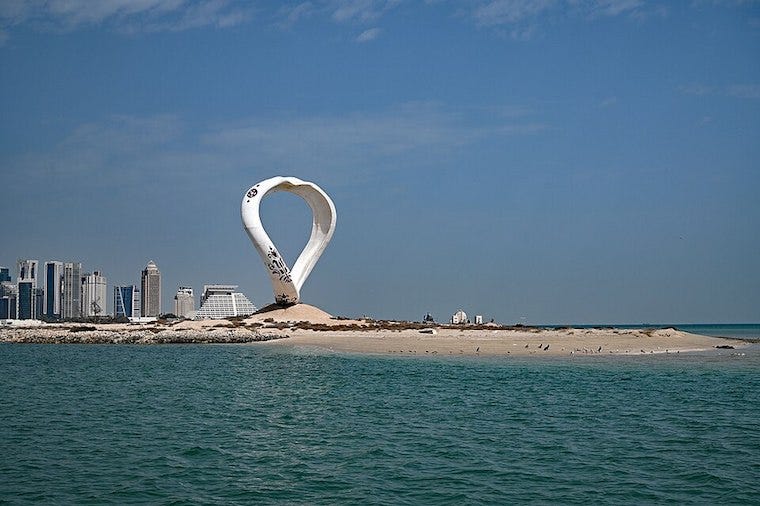
Kuper slips such facts gracefully into his entertaining new memoir of three decades in the stands or press box at soccer matches. He has been to every men’s World Cup since 1990, nine of them as of 2025, and seen drama on and off the field. Kuper watched the American journalist Grant Wahl die of a ruptured aortic aneurysm as Argentina played Holland in Qatar and doctors tried in vain to save his colleague.

I read several chapters of his book, planning to do a full-dress review. But I realized I might be a less-than-ideal critic for it when I kept having look up answers to questions like, “What’s the difference between a striker and a wingman?”
So I skipped the sections about on-field play and focused on those about other topics. Some of the most vivid involve the opportunities the World Cup provides for nations to wield soft power. Kuper notes that it’s a competition in which “America is an also-ran and China doesn’t even figure.” He also offers a sobering recap of the alleged bribery, corruption, and back-room deals that plague FIFA and led to the awarding World Cup to Russia in 2018 and Qatar in 2022.
If you have an appetite for more on how sordid the selection process can be (and a strong stomach), you’ll find it in an excellent nonpaywalled review of Kuper’s book by Dan Friedman in the Los Angeles Review of Books. Friedman played soccer at Cambridge University and rightly says that this book is more than a meditation on FIFA’s corruption in an age of autocracy.