
Letter from a Reader 7.15.26
A delightful book that skewers literary pomposity, why agenting is 'an apprentice industry,' and a coffee-table-topper for 'history dads'

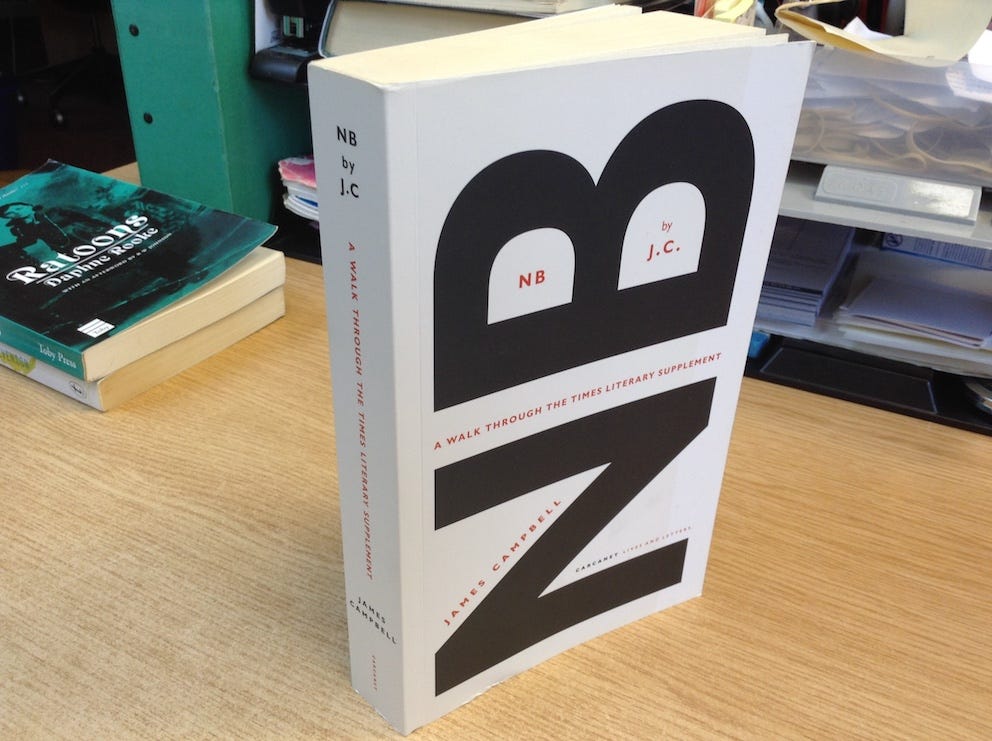
Alexander Fleming had a suggestion for anyone looking for relief from a cold: “A good gulp of hot whisky at bedtime—not very scientific, but it helps.” If literary rather than physical miseries keep you awake, you may find comfort in NB by J.C. (Paul Dry Books, 2023).
For more than two decades, James Campbell wrote a delightful column called NB, Latin for nota bene or “note well,” for the Times Literary Supplement. It appeared under the byline of “J.C.” and gathered the latest literary curiosities to strike his fancy. His book collects the best of its short entries, and they have lost none of the charm that made them the first thing countless subscribers turned to when the TLS arrived.
For some readers, the initials “J.C.” disguised Campbell as well as “Mark Twain” masked the identity of Samuel Langhorne Clemens. But their use seems to have given him a Captain Kirk-like freedom “to boldly go” where no critic had gone before: to a place that routinely gave the literati what they deserved instead of the jet stream of hype that has become the rule, particularly in America.
Week after week, Campbell tweaked their pretensions with a wit that could range from droll to ironic to sarcastic. He took light-hearted but well-placed aim at book awards, literary feuds, reviewers’ clichés, offbeat anthologies, impenetrable academic jargon, logrolling by and interviews with authors, and other incubators of pomposity.
Written by a Scot in London, the NB columns had a cosmopolitan flair and a focus that ranged over books and authors worldwide. Campbell’s opener for a 2009 entry on Julian Barnes, who would later win the Booker Prize for The Sense of an Ending, suggests his approach:
“Julian Barnes is sixty-three, and his memory is getting faulty. He doesn’t remember where he was when President Kennedy was shot, and cannot recall the Lord’s Prayer.”
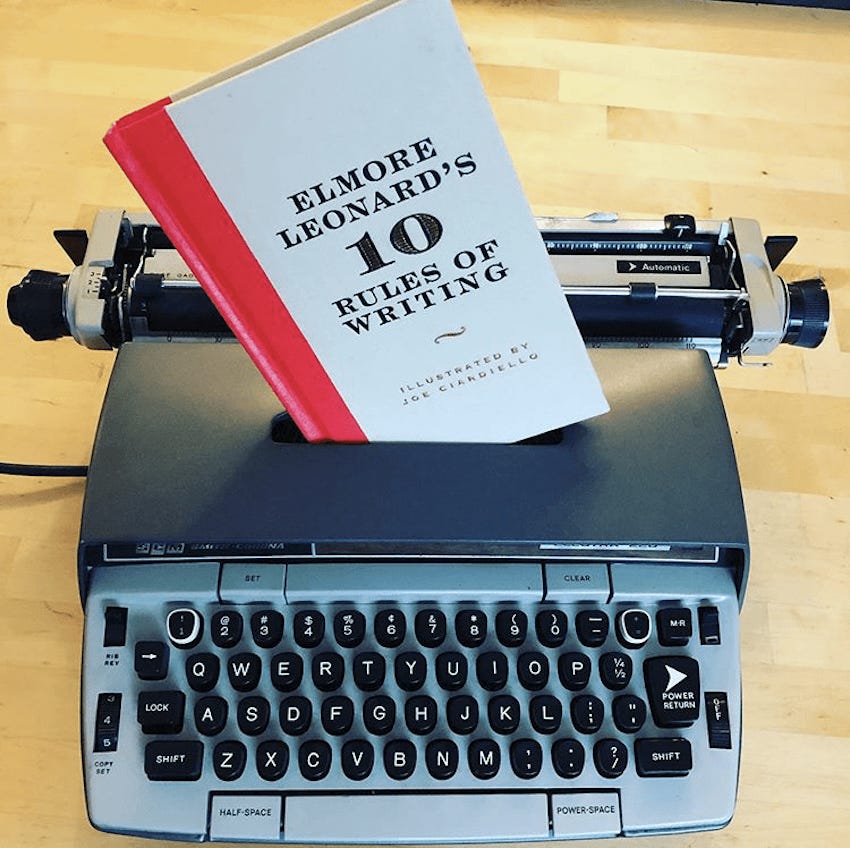
Campbell believed “reviewers should ask more awkward questions of books than they tend nowadays to do, but should strive not to be unjust, and avoid being impertinent.” His NB columns reflect that view. One lists Elmore Leonard’s 10 rules for writing fiction not in order to savage them but to note that all but one could be replaced with its opposite and still be reasonable advice. Campbell’s comments on them gave examples of how much poorer literature would be if Dickens, Tolstoy, and Henry James had heeded Leonard, and it ended with a saner guideline for authors:
“Our rule for the cultivation of good writing is simpler: stay in, read, and don’t limit yourself to American crime fiction.”
Campbell might have added another precept: Brace yourself for the rigors of fame if a U.S. president asks you to write a poem for his inauguration and Hallmark wants to harvest your deep thoughts for its greeting cards. Those things happened to Maya Angelou, and she now prefers to travel by custom-built bus with a “king-size bed” for herself and “two bunks for my drivers.” Angelou must avoid airports for a reason any politician could understand.
“I’m very well known and people often run and put babies in my arms,” she said in a story in the Independent.
Campbell knew how to make hay with such quotes, whether from literary stars or the scientist who discovered penicillin but recommended hot whisky for a cold. He got away with it, you suspect, for two reasons. One was that he wrote so elegantly that some targets may not have realized that he was skewering them. Another was that he saw his follies as clearly as others’. He seemed to think that if he spent his time carving up the absurdities of critics, authors, and arts councils, didn’t that make him a bit absurd, too?
Paul Dry Books, the estimable publisher of NB by J.C., doesn’t bill the book as “self-help.” But writers looking for guidance on how to avoid embarrassing themselves will find plenty of it in his imaginary stylebook, The TLS Reviewer’s Handbook, which lays down his rules for contributors. They include prohibitions on words such as “interrogate” (“except in legal contexts”), “robust” (“except in sporting contexts”), “limn” (‘in any context”), and other excellent precepts.