
Letter from a Reader 7.28.26
Why the Wall Street Journal's 'Five Best' column beats others for book recommendations, the real mystery of 'Rebecca,' and why Jane Smiley doesn't want to write the 'Great American Novel'


If you often have trouble finding something good to read, it’s probably not because you lack recommendations. Your friends, your social media followers, your book club—all are happy to offer ideas. It’s finding trustworthy suggestions that’s the problem.
I used to get a lot of ideas from literary awards, like The Booker Prizes, which announced its 2026 longlist today. But some of the most coveted have become less reliable as they’ve become more commercial or ideologically driven. Sarah Jessica Parker was a judge for last year’s Booker. And while I enjoyed watching her on Sex and the City, I wondered: Would she really be a better guide to my bedtime reading than, say, a librarian or my college roommate?
Amid all of it, one of my most dependable sources of ideas has been a column on books that’s appeared for two decades in the weekend edition of the Wall Street Journal. It’s called Five Best, and it consists of brief reviews of five books on a topic by a guest expert.
Several things lift the column above other recommended-reading lists. One is that its guest experts have—well, expertise, not just opinions. In one of the earliest columns Tom Brokaw chose five books about journalism, beginning with Timothy Crouse’s indictment of pack reporting, The Boys on the Bus, which he said “has yet to be equaled” for its portrayal of “the absurdities and vanities” of reporters on the campaign trail. Nearly two decades later, it still has no equals.
More recently the Journal had Rick Atkinson choose the five best books on Revolutionary War battles and Jonathan Galassi, the best about the seasons. No one could fault either of their qualifications. Atkinson is a two-time Pulitzer winner and the author of the Revolution Trilogy, a deservedly acclaimed series about America’s fight for independence. Galassi is the former editor-in-chief and current chairman of Farrar, Straus & Giroux.
Five Best columns also tend to be much better written—and partly for that reason—more persuasive than similar roundups you see elsewhere, especially in the New York Times Book Review. Two weeks ago the NYTBR asked a guest expert to recommend “forbidden love stories” and got a geyser of gush. The novelist said she loved such stories for their baked-in tension:
“The characters want each other, but they shouldn’t give in! Their lives are too different! They come from different worlds!”
A bit like Anna and Vronsky, then? Apparently not, because things like different worlds don’t matter “when stacked against the magic of finding that one person who understands you the way nobody else does.”
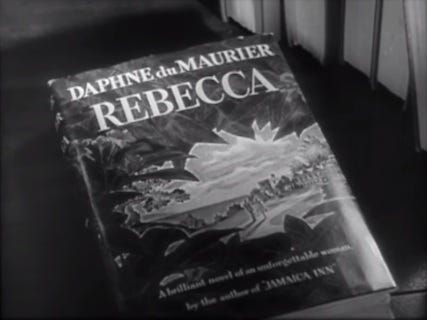
Compare that breathless NYTBR hype with what the novelist Victoria Redel said about one of the world’s great novels of romantic suspense, Daphne du Maurier’s Rebecca, in a Five Best column. At first its central mystery appears straightforward: Why is the young bride of the widowed Maxim de Winter treated so cruelly by Mrs. Danvers, the imperious housekeeper of Manderley? Redel thinks the book involves a deeper question.
#/media/File:Rebecca_in_Rebecca.jpg)