
Letter from a Reader 2.17.26
Why books have 'a longer runway' for promotion now, Robert Frost at home, a new challenge for spy novelists, and publishers' loss of a sense of decency

Happy Mardi Gras to all revelers! We celebrate exuberantly in my town three hours east of New Orleans. The revels begin two weeks before Fat Tuesday with a “walking” parade (no floats) for dogs and their owners, who pull the smallest in red Radio Flyer wagons or push them in prams or strollers. You might enjoy what I wrote about them last year with a photo of their serene highnesses, our canine king and queen.
Are big publishers losing their sense of decency?
Sometimes I look at the latest scoop of Purina Dog Chow a publisher has tossed into my bowl and think of the indignant words of the lawyer Joseph Welch. In 1954, during the televised Army-McCarthy hearings, Sen. Joseph McCarthy insinuated that a young member of Welch’s law firm was a communist because he had belonged to the National Lawyers Guild, the country’s first integrated bar association. An enraged Welch said to McCarthy: “Have you no sense of decency, sir?”
It would be absurd to compare even the worst sins of publishers to the smears, blacklisting, and red-baiting of the McCarthy era. But Welch invoked a quality the Big Five could use more of: decency. They’ve shown too little of it amid the recent scandals involving books such as Raynor Winn’s The Salt Path and Amy Griffin’s The Tell, memoirs published by different imprints of Penguin Random House.
Last year British booksellers showed what “decency” means after a U.K. newspaper revealed that Winn had misstated, exaggerated, or fabricated parts of her book. They promptly offered refunds to customers who felt duped by her story.
Penguin U.K. instead served up more of the self-justifying blather the Big Five too often roll out when journalists report on their failures: “We did all necessary due diligence.” Given that “due diligence” is a legal term, what that meant was: “We did the minimum needed to keep from getting sued from here to bankruptcy court.”

Even less decency followed a front-page New York Times exposé of The Tell, billed as the true story of how Griffin “recovered” memories of sexual abuse by a middle-school teacher after taking a hallucinogen while married to a founder of a hedge fund that invested in psychedelic drugs. The publisher of the book, the Dial Press imprint of Penguin Random House, didn’t offer refunds to all dissatisfied readers. Nor did it take other steps available to publishers when scandals arise, such as apologizing to readers or promising to include a note about a controversy in future editions.
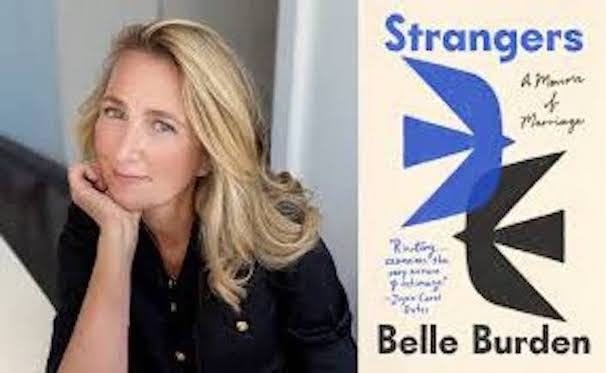
Now Dial has published Belle Burden’s Strangers, another memoir edited by Whitney Frick, and it has credibility issues of its own, including that it gives verbatim accounts of conversations that took place when Burden can’t have been taking notes. Strangers describes the abrupt collapse of its author’s two-decades-long marriage, and it’s better than The Tell. But that’s a low bar when Griffin’s book alleges that a possibly innocent man committed statutory rape.
Will Dial show more decency to readers of Strangers than it did to those of The Tell? Might its staff have felt remorse about Griffin’s book and vowed to do better this time?
An answer of sorts turns up on editor-in-chief Whitney Frick’s page on the Dial Press site. That page lists some of her “critically-lauded1 and bestselling books,” including those of the bestselling self-help guru Glennon Doyle. Nowhere does it mention that Frick edited The Tell. Nor does it list Strangers among her books. In such cases, what decency to readers seems to mean is this: We’ll hide from you that we had anything to do with a literary embarrassment.
Quote of the day: Why books have ‘a longer runway’ for promotion now
“Before 2000, books had a year to, in publisher parlance, ‘find an audience.’ If they did, they went into more printings. If not, publishers pulled them out of print. To keep titles in print, authors were under pressure to promote them furiously from day one. That pressure continues to this day.
“But ever since 2000, when publishing went digital, authors have gained one small but significant advantage. Books no longer go out of print. They’ve become digital files that can be maintained almost for free, and printed when ordered. With the pressure to keep books in print largely eliminated, authors now enjoy longer promotional runways. That extra time doesn’t make promotion any easier. There’s so much more competition today. But authors have more time.”
Michael Castleman in “The Cruelty—and Possibilities—of 21st Century Book Promotion,” The Authors Guild Bulletin, Spring-Summer 2025
A new challenge for spy novelists
In a recent Letter, I noted that I’d been looking for the new John le Carré ever since the old one went to his final safe house in the sky, as one critic put it. I’d tried Mick Herron’s Slow Horses, which the Guardian had praised for its “deadpan British wit.” But the wit was too deadpan or too British for my American ear, and I’d put the novel out to pasture after 30 pages.
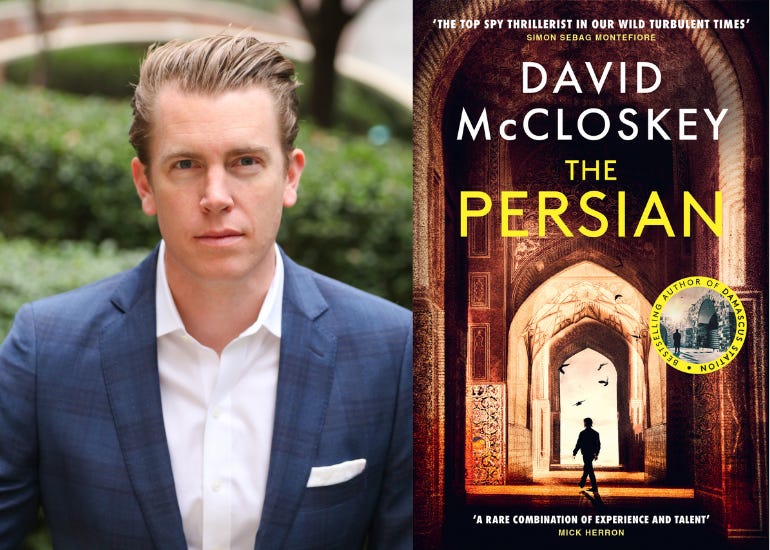
I didn’t understand why couldn’t I warm up to le Carré’s would-be heirs when I liked nonfiction espionage thrillers such as Ben McIntyre’s Operation Mincemeat. A bit of perspective came last month from the CIA analyst-turned-spy-novelist David McCloskey, author of the new The Persian (Norton, U.S., and Hachette, U.K., 2026):